Washington Walks - Free Tours of Washington DC
Home - Washington Walks Tours All Washington DC Tours Washington DC Walking Tours DC Bus Tours Washington DC Group Tours  Private Tours of Washington D.C. Free DC Walking Tours Washington Walks Walking Tour Prices About Washington Walks Contact Washington Walks Washington Walks in the News Washington, DC Links and Other Walking Tours

Washington Walks Brochure


Washington DC Group Tours Brochure Cultural Tourism of DC

Washington DC Commerce Corporation

Home > All Tours > Saturday Afternoons

Get Local Saturdays

A series of weekly walking tours that focus on D.C. neighborhoods and historic sites. 

  • All walks begin at 11:00 a.m. and last two hours unless noted.
  •  All walks take place rain or shine.
  • Cost $15 per person unless noted (age three and younger free)
  • Sign up to receive a weekly Get Local e-mail alert


MAY 18, 2013 

L’Enfant  Plaza:  More Than You Think

MEET OUTSIDE L'ENFANT PLAZA METRO STATION'S MARYLAND AVENUE, SW EXIT (corner of Maryland Avenue and 7th Street, SW)

Believe it or not, L’Enfant Plaza is going to be one of the Next Big Things. But can it overcome its urban renewal-pedestrian-unfriendly design? What can we admire about this bewildering mass of ramps, pocket parks, open spaces, and mid-century architecture?  The National Capital Planning Commission sees a golden opportunity.  It has proposed refashioning and rebranding the entire precinct as the SouthwestEco District.  Champions of President Dwight D. Eisenhower have laid claim to six acres to erect a memorial to this American war hero and statesman.  Walk through a little understood yet fascinating section of the city, a place where the federal government, Mid Century modern architecture, a public transportation hub and an historic building or two quietly stand steps away from Washington’s National Mall.

Led by Carolyn


MAY 25, 2013

Memorial Day Weekend Double Bill

National Mall Memorials:  an Architect’s Perspective

MEET IN FRONT OF THE ORGANIZATION OF AMERICAN STATES in front of the statue of Queen Isabella I (Constitution Avenue and 17th Street, NW)

A professional architect's take on a selection of the capital city’s famous memorials. You’ll hear how controversy has always accompanied memorial-building in our democracy, and you’ll see how the collective decision-making of multiple review committees has shaped what ultimately is built.  The Washington Monument set the precedent, perhaps, for national landmarks becoming entangled in controversy.  The proposed site for the National World War II Memorial was greeted with strenuous objection.  Veterans who had survived the Korean War grappled with how their service could be honored as powerfully as the Vietnam War vets who had succeeded in erecting a memorial--but only after a wrenching process.  Even revered Abraham Lincoln did not come by his stately seat at the Mall’s terminus easily.  This walk will visit all these sites and relay the dramatic, fraught backstory of each along with design critiques and assessments.   

Led by Seth, an architect with Hartman-Cox Architects


MAY 25, 2013   

 Woodley Park and Washington National Cathedral

MEET OUTSIDE WOODLEY PARK-ZOO-ADAMS MORGAN METRO STATION

During the nineteenth century, Woodley Park, a neighborhood situated on a peak of land rising from the valley of Rock Creek, became a desirable summer retreat from the heat and bustle of the city.  Fans of the British book and miniseries Cranford will appreciate that the area’s eponymous mansion, built by Philip Barton Key, a lawyer and congressman who was uncle to Francis Scott Key, was named after a rambling country house in the Elizabeth Gaskell novel.  A stroll along the neighborhood’s winding streets reveals rows of immaculately maintained houses built around former estates such as Tregaron, the current campus of Washington International School, and Twin Oaks, considered the largest privately-owned estate in Washington—twice the size of the White House.   The walk route includes a few unexpected sites like the ultra-modern Swiss embassy and the now-deserted Klingle Road.  Ascending Mount St. Alban’s, participants will have their first glimpse of the glorious Washington National Cathedral, richly adorned with stone carvings and gargoyles.  We’ll stop to view the renowned “Creation Sculptures” that adorn the church’s west façade then walk through the charming Bishop’s Garden to the entrance to the more rustic Olmstead Woods.

Led by Ty


JUNE 1, 2013

Capitol Hill and Eastern Market

MEET OUTSIDE EASTERN MARKET METRO STATION

 Highlights “Tour of Duty:  Barracks Row Heritage Trail”

Although the outside world may associate the term Capitol Hill solely with the U.S. Congress, those who make Washington their home conjure up a very different image:  a vibrant neighborhood spread across one of the largest historic districts in the country filled with quaint row houses, leafy parks, shops and cafes, churches and schools.  A stroll through residential Capitol Hill is akin to visiting a small town.  Pride of place is evident in the careful restoration and loving upkeep bestowed upon the 19th century homes, their postage stamp-sized gardens adorned with flower beds and shrubs.  Although many of the stately row houses seen on this walk were not built until after the U.S. Civil War, Capitol Hill is nonetheless one of Washington’s oldest neighborhoods, first developed during the late 1790s just as the federal government prepared to locate here permanently.  This exploration includes the remains of a 1795 estate, a watering hole famous for its jazz singers, an alley that once teemed with 100 residents and a park teeming with young children and dog lovers.  We’ll finish at beloved Eastern Market, considered by many to be the heart and soul of “The Hill.”

Led by David


More ways to explore this neighborhood:

Capitol Hill House and Garden Tour


JUNE 8, 2013 

Penn Quarter

MEET OUTSIDE ARCHIVES-NAVY MEMORIAL-PENN QUARTER STATION

”Penn Quarter” describes downtown's Seventh Street corridor, where the 19th-century meets the 21st. Hip hotels, restaurants and loft apartments sprouted up amidst attractions like the International Spy Museum, National Portrait Gallery, Shakespeare Theatre and National Building Museum. That most of these are housed in buildings constructed during the 1800s is what makes this walk an irresistible urban scavenger hunt to discover a bygone era--a time when Chinese, German and Italian immigrants lived and worked on and around Seventh Street. If you know where to look,  you can find the old U.S. Patent Office where newcomer Emile Berliner filed applications for the first microphone and disk record ever invented, where Italian stone carvers once worshipped (and where their descendants still enjoy espresso after Sunday Mass), the ornate archway welcoming you to D.C.’s Chinatown, and the humble wooden synagogue that took an historic ride to avoid the wrecking ball.


Led by Carolyn


JUNE 15, 2013 

Southwest Waterfront:  From Watermen to Wreckers to “The Wharf”

MEET OUTSIDE WATERFRONT METRO STATION

 Highlights “River Farms to Urban Towers” Heritage Trail


In less than 200 years Washington’s Southwest waterfront has morphed from a small collection of late 18th-century brick buildings along the Potomac River to a large group of mid 1960s structures of steel and concrete.  In between, the riverside has been the site of a conflagration during the War of 1812, the largest escape attempt by slaves in U.S. history, the execution of the “Lincoln Conspirators,” a clinic providing medical treatment to both black and white neighbors, fish and produce sellers, and even bodies on ice in the District of Columbia Morgue.  Another chapter in the waterfront’s identity is poised to be written when the development team Hoffman-Madison Marquette begins to construct that which has eluded its predecessors:  a lively and vibrant destination for locals and visitors alike.

Led by Carolyn


JUNE 22, 2013

U Street

MEET OUTSIDE U STREET/CARDOZO METRO STATION’s 13th Street exit

Explore the neighborhood that was shared by African American intellectuals, business leaders, and families of all economic levels.  The businesses they owned and the houses they lived in are featured on this walk.  U Street was dubbed “Black Broadway” for the numerous movie theaters, nightclubs and ballrooms frequented by jazz musicians like Cab Calloway, Pearl Bailey, Jelly Roll Morton, and Duke Ellington himself.  You’ll see a theater and club where these performances took place.  The first full service YMCA for African Americans; one of the few hotels that welcomed a black clientele; and the first memorial to African American soldiers who fought in the U.S. Civil War are on the walk route, as are homes occupied by the Ellington family as Duke grew up.  You'll stand on the corner where riots started that extinguished the heyday of the area--but only temporarily.


Led by Amy


JUNE 29, 2013

Brookland

MEET OUTSIDE BROOKLAND/CUA METRO STATION’s 10th Street exit

Brookland was originally the farm of Col. Jehial Brooks. After his death, the area developed as an early suburb northeast of downtown Washington.  The neighborhood is often referred to as “Little Rome” because of the extraordinary number of Catholic institutions (large and small) that have located there.  A walk through this quiet neighborhood reveals a surprising number of unique, beautiful buildings: the Jesuit and Augustinian colleges, the Franciscan Monastery gardens, the spectacular art deco Franciscan College, St. Joseph’s Seminary, and the hidden Varnum Campus complex.  You’ll see some of the local neighborhood joints, too.

Led by Hayden


JULY 6, 2013

July Fourth Weekend Double Bill

Abraham Lincoln’s Washington

MEET OUTSIDE McPHERSON SQUARE METRO STATION’s White House exit

As a young man, Abraham Lincoln “feared of achieving nothing that would make men remember him.” A single gunshot ensured that he would never be forgotten. He served as U.S. president during the Civil War, the bloodiest conflict to have occurred on American soil. Washington, D.C. was the crucible in which Lincoln’s momentous years in office were cast. Although downtown adjacent to the White House has retained little of its Civil War-era character, if you know where to look, the events of Lincoln’s time in the city come to life, whether you are studying a 20th century office building or a Victorian row house. The busy streets filled with Washingtonians going about their business and slow-moving, congested traffic are not that different today than they would have been in the 1860s, when the president himself made his way--except that 21st century Washingtonians benefit from sidewalks to upon which to tread and paved thoroughfares on which to drive. In Lincoln’s day it would have been a muddy slog. However you make your way, the climax of the Lincoln’s Washington story was tragic: he was the first American leader to be assassinated.


Led by David


JULY 6, 2013   

 Woodley Park and Washington National Cathedral

MEET OUTSIDE WOODLEY PARK-ZOO-ADAMS MORGAN METRO STATION

During the nineteenth century, Woodley Park, a neighborhood situated on a peak of land rising from the valley of Rock Creek, became a desirable summer retreat from the heat and bustle of the city.  Fans of the British book and miniseries Cranford will appreciate that the area’s eponymous mansion, built by Philip Barton Key, a lawyer and congressman who was uncle to Francis Scott Key, was named after a rambling country house in the Elizabeth Gaskell novel.  A stroll along the neighborhood’s winding streets reveals rows of immaculately maintained houses built around former estates such as Tregaron, the current campus of Washington International School, and Twin Oaks, considered the largest privately-owned estate in Washington—twice the size of the White House.   The walk route includes a few unexpected sites like the ultra-modern Swiss embassy and the now-deserted Klingle Road.  Ascending Mount St. Alban’s, participants will have their first glimpse of the glorious Washington National Cathedral, richly adorned with stone carvings and gargoyles.  We’ll stop to view the renowned “Creation Sculptures” that adorn the church’s west façade then walk through the charming Bishop’s Garden and the entrance to the more rustic Olmstead Woods.

Led by Terry


JULY 13, 2013

Capitol Hill and Eastern Market

MEET OUTSIDE EASTERN MARKET METRO STATION

 Highlights “Tour of Duty:  Barracks Row Heritage Trail”

Although the outside world may associate the term Capitol Hill solely with the U.S. Congress, those who make Washington their home conjure up a very different image:  a vibrant neighborhood spread across one of the largest historic districts in the country filled with quaint row houses, leafy parks, shops and cafes, churches and schools.  A stroll through residential Capitol Hill is akin to visiting a small town.  Pride of place is evident in the careful restoration and loving upkeep bestowed upon the 19th century homes, their postage stamp-sized gardens adorned with flower beds and shrubs.  Although many of the stately row houses seen on this walk were not built until after the U.S. Civil War, Capitol Hill is nonetheless one of Washington’s oldest neighborhoods, first developed during the late 1790s just as the federal government prepared to locate here permanently.  This exploration includes the remains of a 1795 estate, a watering hole famous for its jazz singers, an alley that once teemed with 100 residents and a park teeming with young children and dog lovers.  We’ll finish at beloved Eastern Market, considered by many to be the heart and soul of “The Hill.”

Led by David


More ways to explore this neighborhood:

Capitol Hill House and Garden Tour


JULY 20, 2013

Georgetown Waterfront

MEET IN THE LITTLE PARK LOCATED AT 28th STREET AND PENNSYLVANIA AVENUE, NW—NEXT TO THE GAS STATION

Georgetown was originally a bustling tobacco port, a gritty place with wharves and rowdy taverns.  After the Potomac River silted up, however, the tobacco trade dwindled and Georgetown’s economy required a new engine to drive it.  This came in the forms of mills constructed along the waterfront.  You’ll see what has become of them on this walk.  First, though, stroll past the little houses resided in by the waterfront inhabitants.  Lock #3 of the C & O Canal comes next, followed by a panoramic view from the edge of the Potomac River.  A tiny neighborhood once called “Brickyard Hill” now boasts a luxury hotel constructed around a former incinerator.  Alley life is revealed with a trek into Cherry Hill.  Then peek inside what was once Georgetown’s public market.  We’ll conclude with a walk through Cady’s Alley, Georgetown’s enclave for swank home design and furnishings.

Led by Carolyn and Seth


JULY 27, 2013

Watts Branch and Marvin Gaye Park

MEET OUTSIDE CAPITOL HEIGHTS METRO STATION

Watts Branch is one of two creeks running from Maryland into the Anacostia River, and has a lovely park along its entire length.  We begin by finding the eastern-most boundary stone of the District of Columbia and then follow the creek through residential neighborhoods until it reaches the Anacostia River.  The walk will stop by the historic Nanny Helen Burroughs School and a place known as “The Swamp.”

Led by Hayden


AUGUST 3, 2013  

Columbia Heights

MEET OUTSIDE COLUMBIA HEIGHTS METRO STATION’s north exit by the Columbia Heights Heritage Trail sign

 Highlights “Cultural Convergence” Columbia Heights Heritage Trail

The 14th Street corridor between Irving Street and Park Road was one of Washington’s most important shopping and entertainment destinations outside downtown. That is until April 4, 1968, when riots following the assassination of Rev. Dr. Martin Luther King, Jr. sparked extensive looting and burning of commercial property. For decades afterwards, boarded-up businesses and empty lots marred the formerly vibrant Columbia Heights.  Nearly 40 years later, change has swept the area once more: the opening of the Columbia Heights Metrorail station in 1999 spurred construction of apartment buildings, row houses, and the massive shopping complex D.C. USA. 

Led by Brian


More ways to explore this neighborhood:

Columbia Heights Day


AUGUST 10, 2013

Renewing Urban Renewal

MEET OUTSIDE WATERFRONT METRO STATION

“Urban renewal” originally described a progressive, well-executed approach to remaking ailing cities in the 1960s.  Today it is equated with wholesale destruction of urban neighborhoods and displacement of thousands of citizens.  In Washington, the epicenter for this phenomenon was a large swath of Southwest, D.C.  Yet although the results of such projects elsewhere were soulless superblocks punctuated by bland architecture, the new Southwest was of a remarkably high quality.  Architects like Chloethiel Woodard Smith used the vocabulary of modernism to design enduring residential communities.  Urban renewal may have forced stark elimination of 19th-century Southwest, yet Woodward Smith’s designs exemplify why planners placed great hope in redevelopment.  As these buildings come of age and are eligible for landmark status (the Tiber Island and Harbour Square coops have filed nominations with the D.C. Office of Historic Preservation) this is the perfect opportunity to explore what might be worth preserving and gain inspiration from the successful restorations of  Arena Stage and the former Marina View Towers.  We’ll also identify what has already been lost, noting the tension between preserving urban renewal landscape plans and developing densely near public transit hubs.

Led by Carolyn


AUGUST 17, 2013

Mount  Pleasant

MEET IN FRONT OF CAPITAL CITY PUBLIC CHARTER SCHOOL (3047 15TH STREET, NW) 

Highlights “Village in a City" Mount Pleasant Heritage Trail

Founded after the Civil War, Mount Pleasant began its identity as a village of influential business people and land owners.  As Washington expanded northeast and northwest of its original boundaries, the quiet village evolved into a fashionable streetcar suburb.  By the 1970s it had become a haven for immigrants and today represents the heart of D.C.’s Latino community.  It is here you can shop in a genuine bodega, dine on Salvadoran specialties or explore the neighborhood farmers’ market on Saturday mornings (where the walk will conclude). You’ll pass Mount Pleasant’s trademark row houses and apartment buildings, its restored public library, and the community’s artistically restored police and fire call boxes.  Also make sure to note the path President Teddy Roosevelt took to skinny-dip in Rock Creek Park.


Led by Amy


AUGUST 24, 2013

U Street

MEET OUTSIDE U STREET/CARDOZO METRO STATION’s 13th Street exit

Explore the neighborhood that was shared by African American intellectuals, business leaders, and families of all economic levels.  The businesses they owned and the houses they lived in are featured on this walk.  U Street was dubbed “Black Broadway” for the numerous movie theaters, nightclubs and ballrooms frequented by jazz musicians like Cab Calloway, Pearl Bailey, Jelly Roll Morton, and Duke Ellington himself.  You’ll see a theater and club where these performances took place.  The first full service YMCA for African Americans; one of the few hotels that welcomed a black clientele; and the first memorial to African American soldiers who fought in the U.S. Civil War are on the walk route, as are homes occupied by the Ellington family as Duke grew up.  You'll stand on the corner where riots started that extinguished the heyday of the area--but only temporarily.


Led by David


AUGUST 31, 2013

Labor Day Weekend Double Bill

A Taste of Penn Quarter

MEET OUTSIDE ARCHIVES-NAVY MEMORIAL-PENN QUARTER STATION

Come along on this ambulatory nibble-and-nosh fest to D.C. phenomena that celebrates the locally grown. We’ll stay on the move, serving up some of our favorite tales of gastronomic history along the way -- from the inaugural party turned food fight to Mrs. Terrell’s quiet milestone in civil rights. Penn Quarter is a downtown neighborhood where nary a suit in the lunch-hour crowd realizes he’s swarming in Washington’s former market neighborhood. These days think fragrant teas, ginger scones, charcuterie, artisanal cheese, and (of course) cupcakes.  During the walk, we'll stop in at a handful of locally-owned eateries and shops to see what Washington's culinary entrepreneurs and artisans are up to. See something you want to try?  Get it to go, savoring the offerings as we continue to the next edible port of call.


Led by Amy and Carolyn


AUGUST 31, 2013   

 Woodley Park and Washington National Cathedral

MEET OUTSIDE WOODLEY PARK-ZOO-ADAMS MORGAN METRO STATION

During the nineteenth century, Woodley Park, a neighborhood situated on a peak of land rising from the valley of Rock Creek, became a desirable summer retreat from the heat and bustle of the city.  Fans of the British book and miniseries Cranford will appreciate that the area’s eponymous mansion, built by Philip Barton Key, a lawyer and congressman who was uncle to Francis Scott Key, was named after a rambling country house in the Elizabeth Gaskell novel.  A stroll along the neighborhood’s winding streets reveals rows of immaculately maintained houses built around former estates such as Tregaron, the current campus of Washington International School, and Twin Oaks, considered the largest privately-owned estate in Washington—twice the size of the White House.   The walk route includes a few unexpected sites like the ultra-modern Swiss embassy and the now-deserted Klingle Road.  Ascending Mount St. Alban’s, participants will have their first glimpse of the glorious Washington National Cathedral, richly adorned with stone carvings and gargoyles.  We’ll stop to view the renowned “Creation Sculptures” that adorn the church’s west façade then walk through the charming Bishop’s Garden and to the entrance of the more rustic Olmstead Woods.

Led by Terry


SEPTEMBER 7, 2013

Abraham Lincoln’s Washington

MEET OUTSIDE McPHERSON SQUARE METRO STATION’s White House exit

As a young man, Abraham Lincoln “feared of achieving nothing that would make men remember him.” A single gunshot ensured that he would never be forgotten. He served as U.S. president during the Civil War, the bloodiest conflict to have occurred on American soil. Washington, D.C. was the crucible in which Lincoln’s momentous years in office were cast. Although downtown adjacent to the White House has retained little of its Civil War-era character, if you know where to look, the events of Lincoln’s time in the city come to life, whether you are studying a 20th century office building or a Victorian row house. The busy streets filled with Washingtonians going about their business and slow-moving, congested traffic are not that different today than they would have been in the 1860s, when the president himself made his way--except that 21st century Washingtonians benefit from sidewalks to upon which to tread and paved thoroughfares on which to drive. In Lincoln’s day it would have been a muddy slog. However you make your way, the climax of the Lincoln’s Washington story was tragic: he was the first American leader to be assassinated. 

Led by David


SEPTEMBER 14, 2013

Yom Kippur NO WALKS


SEPTEMBER 21, 2013

Adolph Cluss in Penn Quarter

MEET OUTSIDE ARCHIVES-NAVY MEMORIAL-PENN QUARTER STATION

In 1862 German immigrant Adolf Cluss went into private practice as an architect and civil engineer in Washington, D.C.  Over the next thirty years, he exerted far-reaching influence over the city’s appearance and infrastructure.  Projects such as the Franklin School, National Museum (today’s Arts and Industries Building), Center Market, and elegant residences for wealthy clients secured his reputation as the city’s leading architect.  The New York Times editorialized that Cluss “had done more than anyone else to foster an improved style of private architecture in the Nation’s Capital.”  Yet all his residential buildings were razed in the 20thcentury, his exuberant red-brick prototype falling victim to changing tastes.  Happily, D.C.’s Penn Quarter neighborhood is home to four significant Cluss sites:  the former Center Market, extant Old Masonic Hall, Calvary Baptist Church, and the Smithsonian American Art Museum, which contains a stunning interior space designed by Adolf Cluss and restored by Hartman-Cox Architects.  The walk will include an interior tour of this space.

Led by Carolyn and Seth


SEPTEMBER 28, 2013

Please enjoy the scores of walking tours (including many by Washington Walks) that are part of the annual Walkingtown DC festival produced by Cultural Tourism DC.


OCTOBER 5, 2013

Park View

MEET OUTSIDE GEORGIA AVENUE-PETWORTH METRO STATION


Park View is a leafy enclave of rowhouses on
the heights of Northwest Washington, D.C.
Stay tuned for a detailed description of this new walk through one of the District's less well-known neighborhoods.

Led by Carolyn with special guest Kent Boese, author of "Park View:  A Walking Tour"


OCTOBER 12, 2013

Peirce Mill

MEETING POINT TO BE ANNOUNCED

The image of Peirce Mill, a simple stone structure standing at a pivotal transportation crossroads in Rock Creek Park, is vividly imprinted in the minds of millions of residents of the Washington D.C. region. Hundreds of bikers, hikers, picnickers, and bird-watchers pass it by on weekend outings, when some of the park roads are closed, and thousands drive by each day in the morning and evening rush hours. Yet few people know either its name or its history. Peirce Mill is a survivor, the last remnant of a 19th century complex of at least eight mills that once operated along Rock Creek in the District of Columbia.  Here's an opportunity to take a close look at this site and learn both the mill's history and how the Friends of Peirce Mill enabled its millwheel to turn once again.

Led by Carolyn with special guest Steve Dryen, author of Peirce Mill:  Two Hundred Years in the Nation's Capital


OCTOBER 19, 2013

Rock Creek Cemetery

MEETING POINT TO BE ANNOUNCED


Rock Creek Cemetery serves both as final resting place for many of Washington, D.C.'s most notable citizens and as an outdoor museum to memorial sculpture. It is also home to St. Paul's Episcopal Church, Rock Creek Parish, the oldest Anglican church in the District of Columbia.

Led by Carolyn


OCTOBER 26, 2013

Logan Circle

MEET OUTSIDE McPHERSON SQUARE METRO STATION’s 14th Street exit


Few Washington neighborhoods have witnessed the dramatic change and breathtaking renaissance of Logan Circle, the city's only unaltered Victorian residential district.  It evolved from rural obscurity to an enclave of architectural splendor, home to wealthy white and later African-American residents.  If you're a fan of Second Empire or High Victorian Gothic homes, this walk is for you.  If you're fascinated by the dynamics of urban neighborhoods, consider the residents of Logan Circle:  Their tenacity and vision preserved the historic district when it teetered on the brink of decline.  Today it is one of the most sought-after addresses in Washington.  Impressive restoration and renovation continue; cool restaurants and shops multiply. For the past two years, residents have been collaborating with staff at Cultural Tourism DC to create the first Logan Circle Heritage Trail.  The walk will preview a handful of key sites to be featured on the new signs.

Led by Carolyn and Tim Christensen, Logan Circle Community Association president


More ways to explore this neighborhood:

Logan Circle House Tour


Get Local All Saints Bonus Weekend

NOVEMBER 2, 2013   

 Woodley Park and Washington National Cathedral

MEET OUTSIDE WOODLEY PARK-ZOO-ADAMS MORGAN METRO STATION

During the nineteenth century, Woodley Park, a neighborhood situated on a peak of land rising from the valley of Rock Creek, became a desirable summer retreat from the heat and bustle of the city.  Fans of the British book and miniseries Cranford will appreciate that the area’s eponymous mansion, built by Philip Barton Key, a lawyer and congressman who was uncle to Francis Scott Key, was named after a rambling country house in the Elizabeth Gaskell novel.  A stroll along the neighborhood’s winding streets reveals rows of immaculately maintained houses built around former estates such as Tregaron, the current campus of Washington International School, and Twin Oaks, considered the largest privately-owned estate in Washington—twice the size of the White House.   The walk route includes a few unexpected sites like the ultra-modern Swiss embassy and the now-deserted Klingle Road.  Ascending Mount St. Alban’s, participants will have their first glimpse of the glorious Washington National Cathedral, richly adorned with stone carvings and gargoyles.  We’ll stop to view the renowned “Creation Sculptures” that adorn the church’s west façade then walk through the charming Bishop’s Garden and to the entrance of the more rustic Olmstead Woods.

Led by Ty


GET LOCAL walks that have already taken place in 2013:


MARCH, 23, 30 and APRIL 6, 2013

Cherry Tree Walk with Casey Trees

RESERVATIONS REQUIRED / $20 per person

All proceeds from the walk will be donated to Casey Trees.

 By late 19th century, the quantity and diversity of tree species located in Washington earned the District the moniker "City of Trees." It was during this era that Eliza Scidmore, an American writer, photographer and first female board member of the National Geographic Society, began her many visits to the country that came to captivate her:  Japan.  There Scidmore first encountered Prunus x yedoensis--the exquisite flowering Yoshino cherry tree.  Join Washington Walks and Casey Trees for a walking tour recounting how Japanese cherry trees came to be planted in the District and the different varieties found in the area.  The walk will also include up-close looks at notable trees in the Enid Haupt Garden (located on the south side of the Smithsonian Castle) along the National Mall, and on the grounds of the Department of Agriculture headquarters.  American elms, a rare pond-cypress, a pair of old ginkgoes, and a Bradford pear planned by Lady Bird Johnson in 1966 are a few of the trees that will be featured.  Each has a unique story and place in the tree canopy of America’s capital city.

Led by Washington Walk guide Carolyn Crouchwith special guests Stephanie Juchs, Community Education Coordinator, Casey Trees or Priscilla Plumb, Youth Programs Coordinator, Casey Trees


Casey Trees is a Washington, D.C.-based non-profit established in 2002 committed to restoring, enhancing and protecting the tree canopy of the nation's capital.  Since its founding the organization has planted over 10,000 trees across all eight Wards and educated thousands on the important role trees play in making the District a more livable community.

APRIL 13, 2013

Mount  Pleasant

MEET IN FRONT OF THE CHARTER SCHOOL AT 3047 15TH STREET, NW 

Higlights "Village in a City" Mount Pleasant Heritage Trail

Founded after the Civil War, Mount Pleasant began its identity as a village of influential business people and land owners.  As Washington expanded northeast and northwest of its original boundaries, the quiet village evolved into a fashionable streetcar suburb.  By the 1970s it had become a haven for immigrants and today represents the heart of D.C.’s Latino community.  It is here you can shop in a genuine bodega, dine on Salvadoran specialties or explore the neighborhood farmers’ market on Saturday mornings (where the walk will conclude). You’ll pass Mount Pleasant’s trademark row houses and apartment buildings, its restored public library, and the community’s artistically restored police and fire call boxes.  Also make sure to note the path President Teddy Roosevelt took to skinny-dip in Rock Creek Park.

Led by Amy

APRIL 20, 2013

Kenilworth Aquatic Gardens

MEET OUTSIDE MINNESOTA AVENUE METRO STATION’s Minnesota Avenue, SE exit at the top of the escalator

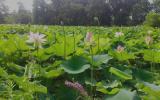
 This walk through far northeast D.C. travels through the quiet, settled 1950s neighborhood Eastland Gardens and past historic 1930s apartment buildings, following the eastern bank of the Anacostia River.  A highlight is the Kenilworth Aquatic Gardens, the only U.S. National Park devoted to aquatic plants.  Founded in the late 19th century as a hobby for a government worker, the gardens have grown to become one of the most beautiful and least known attractions in Washington, D.C. Besides seeing its famous water lilies, you’ll stroll the boardwalk over river wetlands, looking out for herons and dragon flies. 

Led by Hayden

APRIL 27, 2013

U Street

MEET OUTSIDE U STREET/CARDOZO METRO STATION’s 13th Street exit

Explore the neighborhood that was shared by African American intellectuals, business leaders, and families of all economic levels.  The businesses they owned and the houses they lived in are featured on this walk.  U Street was dubbed “Black Broadway” for the numerous movie theaters, nightclubs and ballrooms frequented by jazz musicians like Cab Calloway, Pearl Bailey, Jelly Roll Morton, and Duke Ellington himself.  You’ll see a theater and club where these performances took place.  The first full service YMCA for African Americans; one of the few hotels that welcomed a black clientele; and the first memorial to African American soldiers who fought in the U.S. Civil War are on the walk route, as are homes occupied by the Ellington family as Duke grew up.  You'll stand on the corner where riots started that extinguished the heyday of the area--but only temporarily.


Led by David

MAY 4, 2013 

Kalorama

MEET AT THE CORNER OF 22ND STREET AND DECATUR PLACE, N.W. BY THE OLD POLICE AND FIRE CALL BOXES

Highlights Sheridan-Kalorama Art on Call

Joel Barlow named the estate he purchased in 1807 Kalorama for the expansive views to be had from its place overlooking today’s Rock Creek Park.  No more exquisitely beautiful enclave exists in America’s capital.  Kalorama has always been a prime residential area, its glory the urban mansions located on the high ground between Massachusetts and Connecticut Avenues.  We’ll start by ascending the “Spanish Steps” to reach the heights where Washington’s diplomatic community is evident everywhere you look, many of the original single family homes now occupied by ambassadors or embassy offices.  Former police and fire call boxes punctuate the neighborhood as imaginative works of public art as does a brightly colored panda.  See if you can identify the oldest house in the District and discover the Woodrow Wilson House.  Wilson was the only U.S. president to retire in D.C.  Like him, once you’ve sampled the architectural and natural radiance that is Kalorama, you won’t want to leave!   

Led by Carolyn


More ways to explore this neighborhood:

Kalorama House and Embassy Tour

MAY 11, 2013  

Columbia Heights

MEET OUTSIDE COLUMBIA HEIGHTS METRO STATION’s north exit by the Columbia Heights Heritage Trail sign

 Highlights “Cultural Convergence” Columbia Heights Heritage Trail

 The 14th Street corridor between Irving Street and Park Road was one of Washington’s most important shopping and entertainment destinations outside downtown. That is until April 4, 1968, when riots following the assassination of Rev. Dr. Martin Luther King, Jr. sparked extensive looting and burning of commercial property. For decades afterwards, boarded-up businesses and empty lots marred the formerly vibrant Columbia Heights.  Nearly 40 years later, change has swept the area once more: the opening of the Columbia Heights Metrorail station in 1999 spurred construction of apartment buildings, row houses, and the massive shopping complex D.C. USA. 

Led by Brian


More ways to explore this neighborhood:

Columbia Heights Day


Free Walking Tours in Washington DC
How To
 

Duration: Each walk lasts approximately 2 hours unless noted.

Weather:
Walks are given rain or shine.


Where: Most walks embark from outside a Metrorail station.
 

Who: Your guide will be wearing a blue and green Washington Walks badge.


Cost: $15 per person (kids 3 and younger free) unless noted. $5 discount with U.S. military or federal government ID. No reservations necessary (unless noted.)  Simply show up and pay the walk fee with cash.  (Groups of 25 or more should notify us in advance.)
 

You can purchase online in advance using a credit card through .